
Saturday Mornings of Theoretical Physics events happened before 2022

AI in Physics
Saturday, February 29, 2020 - 10:30
AI in Physics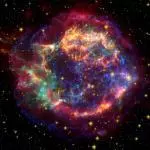
Supernovae
Saturday, October 26, 2019 - 10:30 Supernovae
Stars sometimes explode with such violence that for a week or two they outshine an entire galaxy of 100 billion stars. These `supernova explosions' can end the lives of both massive, young stars and welter-weight dead stars: white dwarfs.
Higgs: the new fundamental interactions
Saturday, May 11, 2019 - 10:30
Higgs: the new fundamental interactions
Entropy
Saturday, November 17, 2018 - 10:30
EntropyThe practical objective of improving steam engines led to an impressive level of abstract thinking during the development of thermodynamics.

Quantum Amplitudes, Classical Ignorance & Quantum Information Processing
Saturday, June 30, 2018 - 10:30 Quantum Amplitudes, Classical Ignorance & Quantum Information Processing
A major theme in current theoretical physics is understanding the implications of quantum mechanics for the dynamics of composite systems. When sub-systems interact, they naturally become correlated.
Galaxy Dynamics
Who can fail to be impressed by the grand sweep of spiral arms across the face of a galaxy? Look deeper and galaxies also pose fascinating problems in non-equilibrium statistical mechanics.
Superfluids and Superconductors
Saturday, October 28, 2017 - 10:30
Superfluids and SuperconductorsSuperfluidity and superconductivity -- the flow of matter or electrical current without friction -- are the two most spectacular manifestations of quantum mechanics at a macroscopic scale, and the understanding of these phenomena is one of the great achievements of quantum theory applied
Fluids and Flows
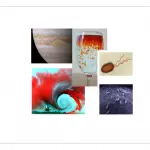
The flow of liquids and gases is described by the Navier-Stokes equation
"More is different" - how states of matter emerge from quantum theory
Saturday, October 29, 2016 - 10:30
"More is different" - how states of matter emerge from quantum theoryThe properties of all forms of matter, from the most mundane to the most exotic kinds produced in advanced laboratories, are consequences of the laws of quantum mechanics.
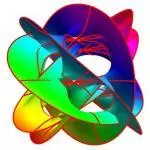
String Theory
Saturday, May 21, 2016 - 10:30
String TheoryFor half a century physicists have explored and developed "string theory" which continues to be a major area of theoretical physics research today. What is string theory, and why are theoretical physicists willing to devote their lives to it?
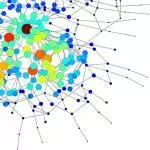
How computers have changed the way we do physics
Saturday, February 6, 2016 - 10:30
How computers have changed the way we do physicsThe power of available computers has now grown exponentially for many decades. The ability to discover numerically the implications of equations and models has opened our eyes to previously hidden aspects of physics and greatly extended the range of phenomena to which the concepts of physics can be applied.
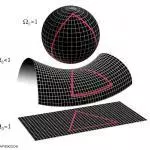
Einstein's general theory of relativity a century on
Saturday, September 19, 2015 - 10:30
Einstein's general theory of relativity a century onThe most recent Morning of Theoretical Physics introduced Einstein's General Theory of Relativity (GR) published exactly a century ago. Despite strenuous efforts to replace it with a theory consistent with quantum mechanics, Einstein's theory remains the best available account of gravity.
From quantum bits to exotic particles
Saturday, May 9, 2015 - 10:30
From quantum bits to exotic particles‘I think I can safely say that nobody understands quantum mechanics' - Richard Feynman. The seventh Morning of Theoretical Physics was devoted to the idea of quantum computation and the strange behaviour of certain types of fundamental particle.
Exploring the high energy frontier at the LHC
Saturday, February 7, 2015 - 10:30
Exploring the high energy frontier at the LHCThe speakers at this Morning of Theoretical Physics discussed how ideas from theoretical particle physics guide the high energy accelerator programme at CERN.
Black holes: where physics reaches its limit
Saturday, September 20, 2014 - 10:30
Black holes: where physics reaches its limitThe fifth Saturday Morning of Theoretical Physics saw three talks discussing ideas from theoretical physics are currently being applied to Black Holes.
Plasmas: the normal form of matter and the key to unlimited energy
Saturday, May 10, 2014 - 10:30
Plasmas: the normal form of matter and the key to unlimited energyThe fourth installment of the Mornings of Theoretical Physics was devoted to the physics of plasma – the fourth state of matter, the fabric of much of the visible universe (from stars to galaxies to intergalactic space), the fuel of fusion reactors – and a relatively recent addition to the core activities of the Rudolf Peierls Centre for Theoretical Physics.
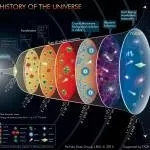
Inner space meets outer space: covering the connections between cosmology and particle physics
Saturday, January 25, 2014 - 10:30
Inner space meets outer space: covering the connections between cosmology and particle physicsAt this event the speakers examined the implications of recent astrophysical experiments for physics beyond the Standard Model, considering the connections between cosmology and particle theory.
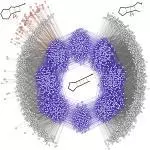
Theoretical physics applied to living systems
Saturday, September 21, 2013 - 10:30
Theoretical physics applied to living systemsThe physics of living matter was explored in this second event: addressing current ideas surrounding active materials - such as cells and microorganisms - and systems, discussing how these systems naturally provide a testing ground for theories of non-equilibrium statistical physics, and how evolution finds solutions in hyper-astronomically large search spaces.

Using field theory to understand material reality
Saturday, June 22, 2013 - 10:30
Using field theory to understand material realityThe topic of the inaugural event on 22 June 2013 was the discovery in the 20th century that the vacuum is a complex dynamical system and that material reality consists of nothing but excited vacuum.